
Divorce Is a Rite of Passage
We recognize some transitions as rites of passage.
Puberty.
Graduation.
Marriage.
Parenthood.
Retirement.
These life events are marked by ceremonies, traditions, and cultural acknowledgment. We gather. We celebrate. We offer guidance. We understand that the person entering the experience will not be the same person who emerges from it.
Yet one of the most transformative experiences many people will ever endure receives almost none of this recognition.
Divorce.
Instead, divorce is often treated as a legal process, a private failure, or a problem to be solved as quickly and quietly as possible. Friends disappear. Family members become uncomfortable. The focus shifts to paperwork, finances, and logistics.
But anyone who has lived through divorce knows it is far more than that.
Divorce is a rite of passage.
Like all true rites of passage, divorce requires a person to leave behind an old identity before a new one has fully formed. The familiar structures that once defined life—partner, spouse, family unit, shared future—begin to dissolve. What follows is often a period of uncertainty, grief, confusion, and profound questioning.
Who am I now?
What do I actually want?
What parts of myself did I lose along the way?
What truths have I been ignoring?
These are not legal questions.
They are transformational questions.
Historically, many cultures understood that major life transitions required community support and intentional guidance. Elders helped initiate younger generations into new stages of life. Ceremonies marked endings and beginnings. There was recognition that growth often requires a symbolic death of the old self before the new self can emerge.
Modern divorce rarely offers such support.
Instead, people are expected to continue working, parenting, paying bills, attending social events, and functioning as though nothing extraordinary is happening. They are often given legal advice but very little guidance for the emotional, spiritual, and identity-based transformation unfolding beneath the surface.
And yet that transformation is often where the deepest work occurs.
Because divorce asks us to reclaim ourselves.
It asks us to examine the stories we inherited about love, sacrifice, family, success, and worthiness. It asks us to question expectations we may have spent decades trying to fulfill. It asks us to separate who we truly are from who we were told we should be.
This is rarely comfortable work.
In fact, it often requires moving against the grain of culture.
Our culture rewards compliance. It rewards maintaining appearances. It rewards staying quiet, staying small, and preserving the status quo.
Reclamation asks something different.
It asks us to tell the truth.
Sometimes that truth is that the relationship no longer serves our growth.
Sometimes that truth is that we abandoned ourselves in order to maintain peace.
Sometimes that truth is that we have outgrown the life we once worked so hard to build.
Speaking these truths can feel terrifying because they often challenge family expectations, cultural norms, religious teachings, or societal narratives about what a "successful" life should look like.
But this is precisely why divorce can function as a rite of passage.
Not because the marriage ended.
But because of who we become in the process.
The people who emerge from divorce are often not simply single versions of their former selves. They are individuals who have confronted grief, uncertainty, loss, fear, and identity itself. They have been asked to let go of what was and step toward what might be.
The journey is not easy.
Few rites of passage are.
But when approached consciously, divorce can become an invitation—not merely to survive an ending, but to reclaim a life.
And perhaps that is what deserves recognition.
Not the divorce itself.
But the courage it takes to walk through the fire of transformation and emerge more fully oneself than before.
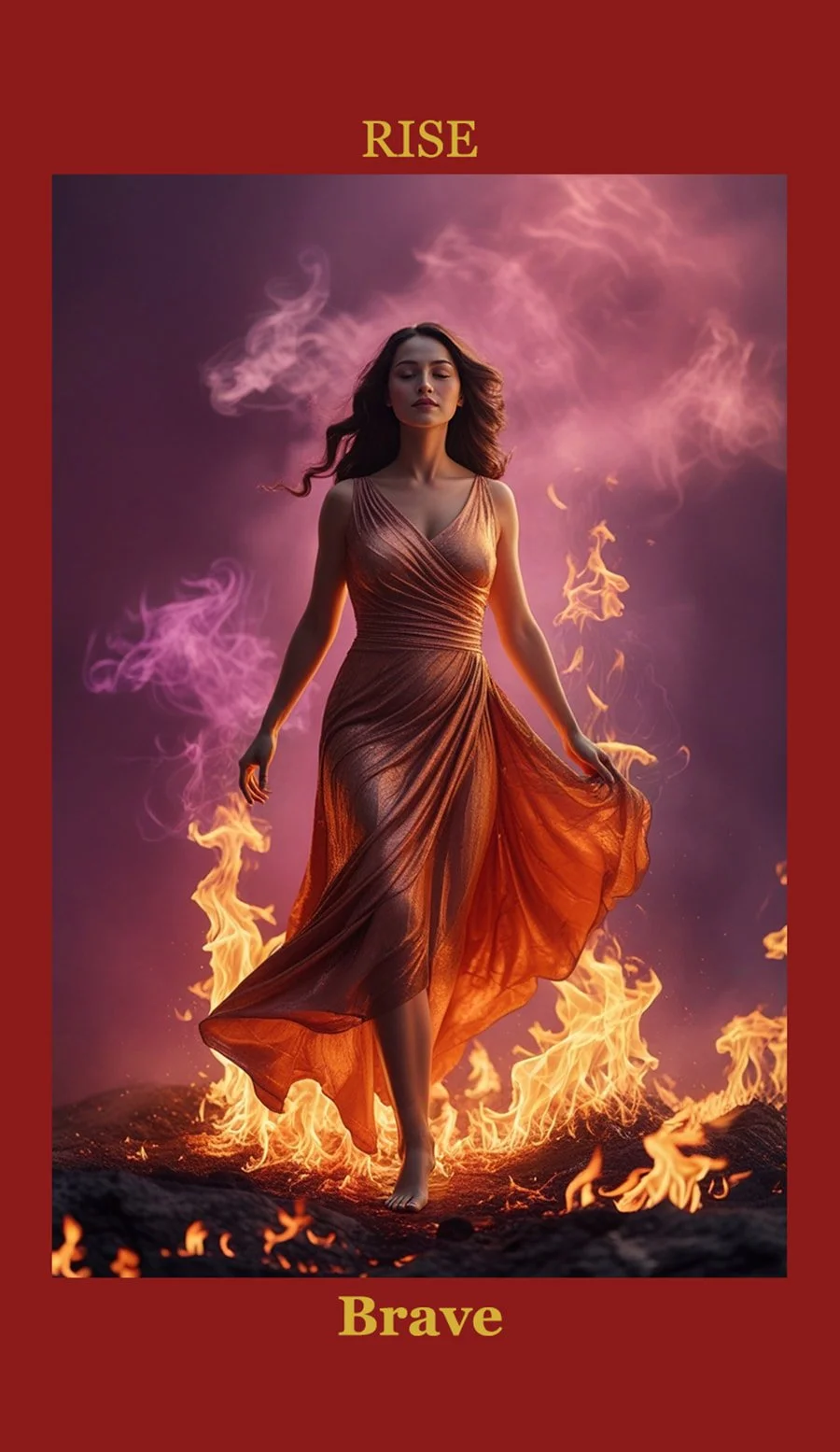
Brave, from theRebirth Oracle Deck by Divorce Doula Natasha Bacca
Walking the Passage Alone Isn't the Goal
One of the reasons I became a divorce doula is because I experienced firsthand how little support exists for people navigating this transition.
I created the support I wish I had received.
There were professionals to address the legal process. There were forms to complete and deadlines to meet. But there was very little guidance for the deeper questions:
Who am I becoming?
What parts of myself am I reclaiming?
How do I rebuild a life that feels true?
That is the work I now help others navigate.
If you're moving through separation, divorce, or the long journey of finding yourself again, know that you don't have to navigate the passage alone.
✨ Schedule a consultation
✨ Explore my books, courses, and resources
✨ Follow along on Instagram for weekly reflections on divorce, healing, and rebirth
Because divorce is not simply the end of a marriage.
For many people, it is the beginning of themselves.
With love and deep gratitude to walk alongside you,
💖 Natasha
Divorce Doula • Certified High-Conflict Divorce Coach • Certified Mediator
Educator • Survivor • Advocate • Author • Artist